Power outages, equipment damage and a flood of injured patients left medical staff in southern Japan working under field-hospital conditions
Emergency rooms across Kumamoto Prefecture spent Wednesday stretched past capacity, a day after a powerful earthquake tore through the region, cutting electricity to tens of thousands of homes and sending hundreds of injured residents streaming into hospitals that were themselves damaged by the shaking.
The quake, estimated at magnitude 6.8 to 7.1, struck southern Kyushu at around 4:27 p.m. local time on Tuesday, registering the maximum reading of 7 on Japan’s seismic intensity scale in the hardest-hit areas. By Wednesday, officials had confirmed at least 13 deaths, more than 380 injuries and upward of two dozen people still unaccounted for.
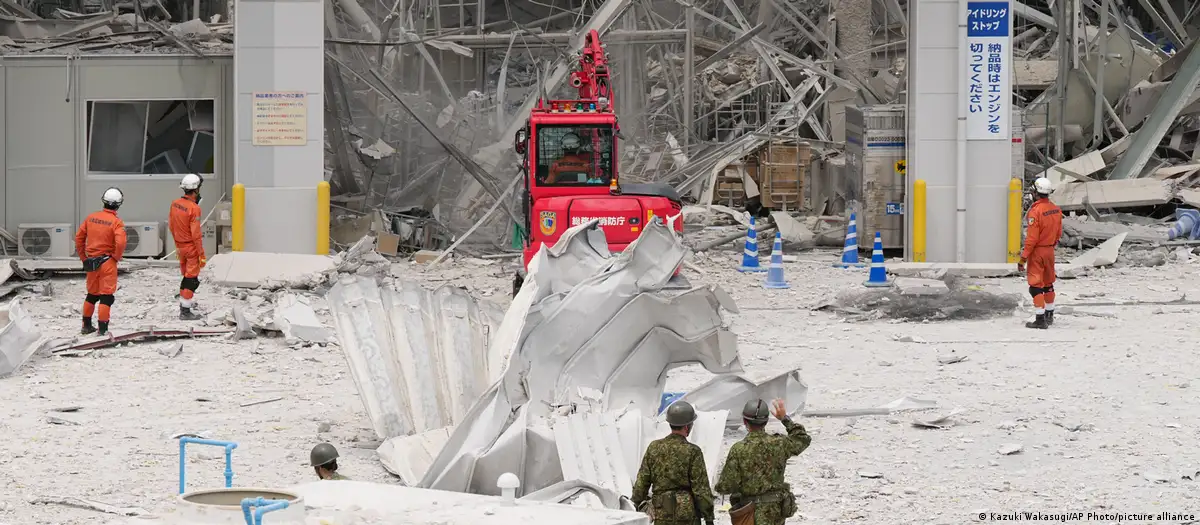
Image: Kazuki Wakasugi/AP Photo/picture alliance
Hospitals overwhelmed near the epicenter
The strain fell hardest on medical facilities close to Uki City, near the quake’s center. One hospital there lost power entirely and, according to staff, ended up functioning “like a field hospital,” treating patients without its normal equipment or systems. A second hospital in Uki stopped taking new admissions altogether after 86 injured people arrived in a short span, three of them in serious condition.
Across the wider region, more than 350 people sought treatment for injuries ranging from broken bones and burns to crush wounds suffered when people were trapped under falling objects. Several hospitals reported their own infrastructure failing at the same time patients were arriving — leaking water lines, knocked-out electrical systems and broken equipment among the problems staff had to work around. At least two facilities each treated more than 50 patients, and one 400-bed hospital in Kumamoto city reported it was already full within hours of the quake.
Deaths mount at collapse sites
The fatalities extended beyond the hospitals themselves. Two women in their twenties died when part of Aeon Mall Kumamoto collapsed following an explosion, and rescuers spent hours pulling other people from the wreckage. At a Nippon Paper Industries plant in Yatsushiro, a chimney came down, killing or trapping workers on site. Additional deaths were tied to house collapses and other structural failures reported across the prefecture as the shaking rippled through the region.
Infrastructure buckles, thousands displaced
The quake’s damage reached well beyond medical facilities. Nearly 50,000 households lost power, and tens of thousands more went without running water. Roads split open in multiple locations, a freight train derailed, and rail operators suspended service on the Kyushu Shinkansen line. Kumamoto Airport closed its runway as crews checked for damage.
About 9,000 residents moved into evacuation centers set up across the region. Conditions there grew more difficult as forecasters called for temperatures above 35°C, raising the risk of heat-related illness in shelters without reliable power or air conditioning. Aftershocks continued through the following day — officials tracked well over 60 of them, with some counts running past 170 — and authorities warned that strong tremors and landslides remained a risk for roughly a week.
Response draws on lessons from 2016
Japan’s Self-Defense Forces sent thousands of personnel to the affected areas to assist with search-and-rescue work, and neighboring prefectures dispatched additional emergency crews. Prime Minister Sanae Takaichi said rescue teams were racing against time to reach anyone still trapped in the rubble.
Seismologists pointed to the Hinagu Fault zone as the likely source of the rupture, and several suggested a connection to the destructive earthquakes that hit the same area in 2016 — theorizing that stress left behind by those quakes may have built toward Tuesday’s rupture. Officials also credited Japan’s strict building codes with limiting the number of full building collapses given the intensity of the shaking.
As of Wednesday, recovery crews remained focused on two priorities: reaching people still trapped and restoring power and water to a region where hospitals are still working to get back to full strength.