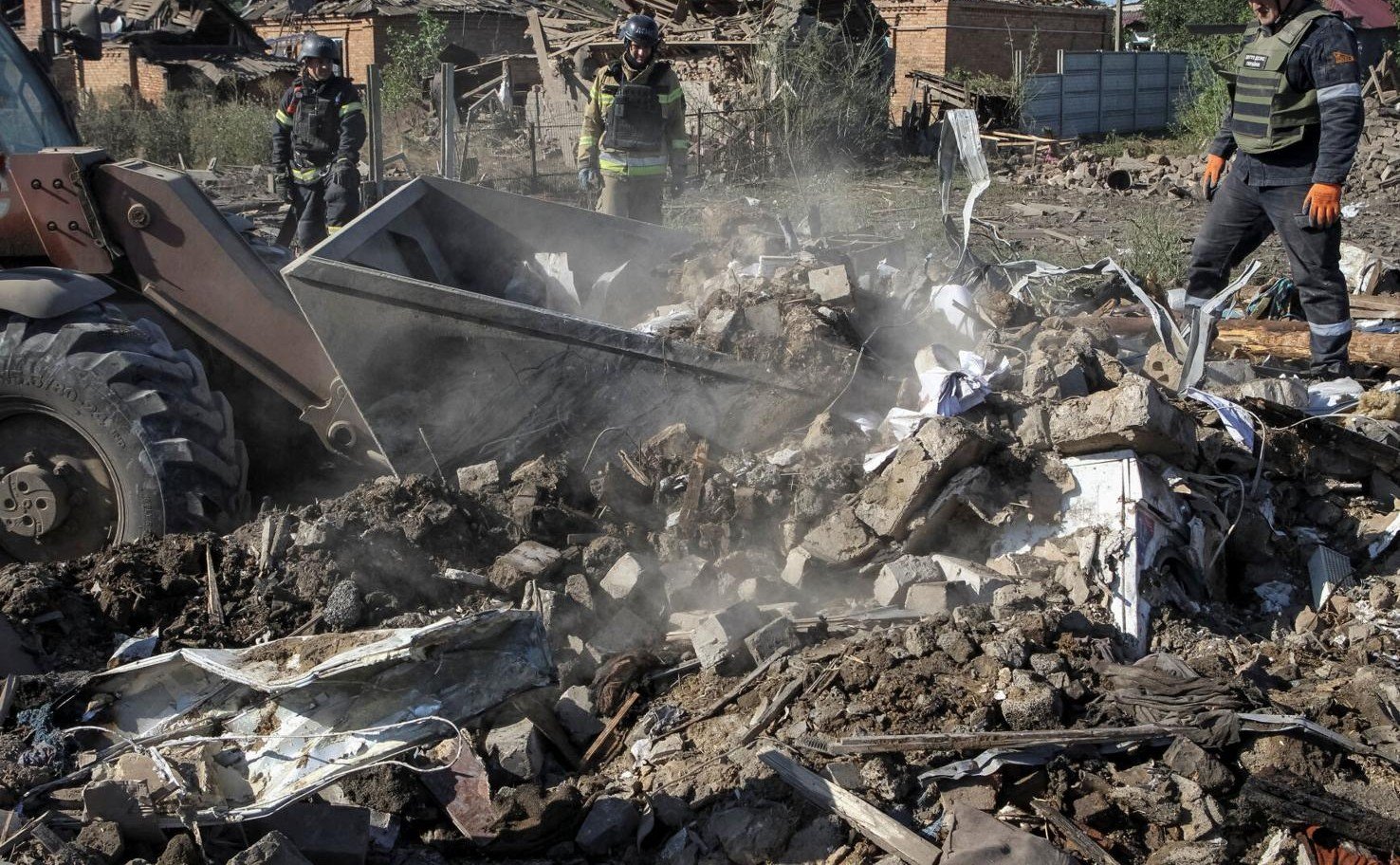
Between 8 and 10 civilians (including children) were killed by Russian missile and drone attacks in Ukraine overnight from July 30, 2026, while a Russian cruise missile entered Polish airspace, crashed in a rural field and caused NATO to send jets into the sky.
The Russian large-scale assault included more than 70 missiles (such as ballistic missiles and Kh-101 cruise missiles) and over 280 attack drones. Although Ukrainian forces managed to intercept or neutralise the majority (that is, more than 260 drones and a number of missiles) of them, the attacks still resulted in deaths, injuries, and damage in several areas.
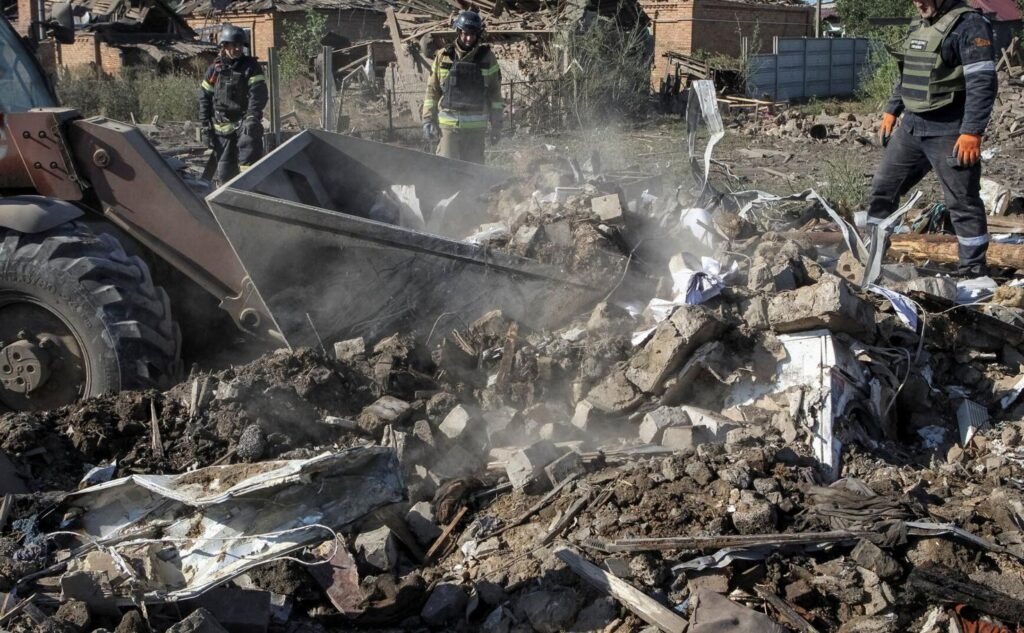
Image credit : Reuters
Casualties and Damage in Ukraine
The Ukrainian president, Volodymyr Zelenskyy, together with officials from the region, stated that at least 8 to 10 civilians had been killed and over 50 had been injured. Among the major incidents were:
In the Dnipropetrovsk region (near Kryvyi Rih, which is Zelenskyy’s hometown) a ballistic missile hit a residential house, resulting in six people being killed, among them a 6-year-old girl and boys who were 11 and 17 years old; the parents of the children also died and two other children were pulled from the ruins.
In Kyiv at least one person (a man aged 31) was killed by ballistic missiles and some were injured. Over 56,000 people took refuge in subway stations during the night.
In Lviv, in western Ukraine, a cruise missile strike resulted in one person being killed and more than 30 others injured, among them children who were 6, 13, and 15 years old. Some residential buildings, a school, and several kindergartens were damaged.
In other cases, a drone attack in Poltava resulted in one person being killed and glide bombs struck a man who was 56 years old in Kherson. The strikes also targeted infrastructure, businesses, and locations that Russia had said were military-related such as air bases, arms factories, drone production facilities, and logistics hubs.
Zelenskyy pointed out the severe lack of Western air-defence interceptors (in particular those designed to deal with ballistic missiles), stating that the Ukrainian forces had still managed to carry out their duties very well given the restricted amounts available to them. He attributed the losses to the delays in the delivery by their partners of systems such as the Patriot. This statement came shortly after Zelenskyy had held meetings with U.S. President Donald Trump and with defence companies in order to secure faster deliveries of the Patriots and production licences for Ukraine.
The Russian Defence Ministry referred to the operation as a “major strike” against Ukrainian military and military-industrial targets.
Missile Incident in Poland
A Russian Kh-101 cruise missile entered Polish airspace while the barrage was taking place, moved about 90 to 95 km westward and crashed in a field close to the village of Tarnawa-Kolonia (in the Lublin Voivodeship, in southeastern Poland), at a distance of 60 to 100 km from the Ukrainian border. The missile left a big crater (it was reported to be about 10 metres or 32 to 33 feet in width) but did not cause any injuries or any considerable damage outside of the spot where it crashed; fragments showed that it had been armed.
On July 30, during the early hours of the day, Polish forces spotted an ‘unidentified object’ travelling in a westerly direction. In order to identify it and possibly intercept it, an F-16 fighter jet was launched, but the object then vanished from radar. A helicopter managed to find the likely site of the crash and ground teams went to investigate it. Polish Prime Minister Donald Tusk described the event as ‘a very serious incident’ and stated that all the evidence pointed to a Russian Kh-101 cruise missile. He emphasised that there was no reason to think that Poland had been the intended target, set up an inquiry, went to the site himself, and contacted the leaders of NATO and Europe.
Andrii Sybiha, Ukraine’s foreign minister, stated that it was a Russian Kh-101 which had violated Polish airspace and maintained that more robust Ukrainian air defence systems would also contribute to the security of Europe.
NATO and International Response
Two fighter jets, an attack helicopter and other aircraft were scrambled by NATO forces in Poland, at the same time ground-based air defence systems were put into action. NATO Secretary-General Mark Rutte called the incident ‘yet another reckless action by Russia’ and stated that it was a ‘dangerous consequence of its war against Ukraine’; he added that Poland and NATO had activated their defences and that the alliance would take ‘all the necessary measures to defend NATO territory’. A spokesperson from a NATO military command confirmed that the missile in question was Russian (although the exact type was not known at the time of some of the early statements) and that it was part of the overnight barrage against Ukraine.
Tusk stated that his partners shared a complete sense of solidarity and were ready to provide help. Canada and the other allies also denounced the strikes and the infringement of airspace. The event has increased worries regarding the war possibly spreading further into NATO territory, although Polish and NATO officials regarded it as a serious but not targeted violation rather than a deliberate attack on the alliance.
Broader Context
All this took place while Russia was carrying out strikes on Ukrainian cities and infrastructure almost every day, Ukrainian long-range drones and missiles were attacking Russian oil facilities and other targets (such as several Wildberries warehouses), and the Ukrainians were still working to obtain more advanced air defence systems. Although previous Russian missiles or debris had at one time or another briefly entered or affected Polish territory during the war, this was a significant armed impact which had gone deep enough to produce a large crater.
According to the latest report (covering the period from July 30 to 31, 2026), inquiries into the effects of Poland’s actions were still being carried out, the casualty numbers in Ukraine might still be revised as a result of rescue operations, and diplomatic and military co-ordination between Ukraine, Poland and NATO was continuing. There was no sign of an escalation under NATO’s Article 5, the emphasis instead being on maintaining defence readiness and providing support for Ukraine’s air defence systems.